
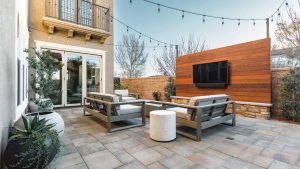
Sloped yards are common in San Diego. Hills, canyons, and elevation changes create beautiful views but challenging landscapes. Many homeowners look at their sloped backyard and see problems. We see opportunities.
A well-designed sloped yard can become the best outdoor space on your street. Terraced patios, retaining walls, and smart drainage turn steep terrain into functional living areas. Here are seven backyard design ideas that work for San Diego homes with sloped yards.
1. Build Terraced Patios For Multiple Outdoor Rooms
Terracing creates flat spaces on sloped ground. Instead of one sloped yard, you get multiple level areas. Each terrace becomes its own outdoor room.
The top terrace might hold your dining area with a built-in BBQ. The middle level could have fire pit seating. The bottom terrace works as a play area or garden space.
Retaining walls separate each level and hold back soil. Natural stone or modular block systems work well in San Diego. They handle our soil conditions and look great for decades.
Steps connect the terraces. Wide, comfortable steps with good lighting make moving between levels easy and safe. Landings every 6 to 8 steps give you places to pause and enjoy the view.
Properties in areas like Point Loma, Mission Hills, and parts of North County benefit from terraced designs. You maximize usable space and create visual interest.
2. Install Retaining Walls That Do Double Duty
Retaining walls solve erosion problems and create flat spaces. But they can do more than just hold back dirt.
Seat walls along the edge of a patio provide extra seating without taking up floor space. Top them with cushions during parties. The rest of the time, they define your patio boundary.
Planter walls create raised beds for vegetables or flowers. The soil drains better than ground level beds. Your back doesn’t hurt as much when you garden.
Fire pit walls combine seating and ambiance. Built-in bench seating around a fire pit makes the perfect gathering spot for cool San Diego evenings. Learn more about outdoor living spaces that incorporate these features.
The height and design of retaining walls matters. Walls over 4 feet typically need engineering and permits. Work with a design-build team that handles this process for you.
3. Add Cascading Steps With Landscape Lighting
Steps on sloped yards get used daily. Make them safe, comfortable, and attractive.
Wide steps feel more inviting than narrow ones. We typically build steps at least 4 feet wide. Deeper treads make climbing easier.
Materials matter in San Diego. Pavers stay cooler than concrete. Textured surfaces prevent slipping when morning dew or rain makes surfaces wet.
Landscape lighting transforms steps from functional to beautiful. Low voltage LED lights along the sides create a glowing pathway at night.
Steps don’t have to run straight up and down. Curved or switchback designs add visual interest and make steep slopes easier to climb.
4. Design Drainage That Protects Your Investment
Water runs downhill. On sloped properties, it runs fast. Without proper drainage, water damages retaining walls, floods patios, and erodes hillsides.
French drains collect water before it causes problems. These gravel-filled trenches with perforated pipes move water away from structures.
Dry creek beds handle larger water flows during our winter rains. River rock and boulders create natural-looking channels that guide water safely through your yard.
Permeable pavers let water soak through instead of running off. This reduces pressure on drainage systems and recharges groundwater.
San Diego’s clay soil doesn’t absorb water quickly. Proper drainage prevents mudslides, foundation problems, and landscape damage during our rainy season.
5. Create Privacy With Strategic Planting On Different Levels
Sloped yards give you opportunities to block views without planting massive hedges. Place plants at different elevations to create privacy screens.
Tall grasses or shrubs on a lower terrace can block sightlines from neighboring properties. Trees planted mid-slope provide privacy for upper level patios.
Native plants work best in San Diego. They handle our climate without constant watering. California lilac, toyon, and manzanita grow well on slopes and require little maintenance once established.
Groundcovers prevent erosion on slopes too steep for other uses. Ice plant, trailing rosemary, and dwarf coyote brush spread across hillsides and hold soil in place.
Irrigation zones matter on sloped properties. Plants at the top of a slope get less water than plants at the bottom where water naturally collects.
6. Install An Infinity Edge Pool That Embraces The View
Sloped properties often have great views. An infinity edge pool takes advantage of this.
The water appears to drop off into the horizon. The vanishing edge creates a seamless transition between your pool and the view beyond.
These pools work especially well on properties with ocean, canyon, or city views. Areas like La Jolla, Mount Helix, and Sunset Cliffs are perfect candidates.
The technical side requires expert engineering. The catch basin below the vanishing edge collects water and pumps it back to the pool. Grading and drainage need careful planning.
Not every sloped yard works for an infinity pool. But other pool designs can still take advantage of elevation changes. A raised spa on the upper level with a pool below creates visual interest.
7. Add An Outdoor Kitchen On The Flattest Section
Outdoor kitchens need relatively flat, stable ground. On a sloped property, this usually means your main patio terrace.
Built-in BBQs, prep counters, and beverage fridges turn your patio into an entertaining hub. San Diego’s weather lets you use outdoor kitchens year-round.
Position your outdoor kitchen near the house if possible. This makes running utilities like gas and water easier and cheaper.
Cover your outdoor kitchen. A pergola, solid roof, or even a large umbrella protects your investment and makes the space more comfortable. San Diego gets hot from June through September.
The grill becomes the focal point. Face it toward the view or toward the party, depending on your preference.
Getting Started With Your Sloped Yard Design
Every sloped property is different. Soil type, sun exposure, existing trees, and views all affect the best design approach. So does your budget and how you plan to use the space.
Start with a site analysis. A professional landscape designer in San Diego looks at grade changes, drainage patterns, soil conditions, and access. This information shapes the design.
3D renderings help you visualize the finished space. You see how terraces connect, where walls go, and how the design flows. This makes decisions easier and prevents surprises during construction.
A single design-build team handles everything from concept through construction. You work with one company instead of juggling a designer, multiple contractors, and material suppliers.
Permits and engineering get handled properly. Retaining walls, grading, and drainage often require permits in San Diego County. A design-build firm navigates this process for you.
Western Outdoor has designed and built landscapes on sloped San Diego properties for over 17 years. We’ve worked in every neighborhood from coastal areas to inland valleys. Our team handles the entire process, including permits and engineering.
Your sloped yard can become your favorite feature instead of your biggest headache. Terraced patios, retaining walls, proper drainage, and strategic planting transform challenging terrain into beautiful, functional outdoor living space.
Ready to see what’s possible with your sloped property? Contact us for a design consultation. We’ll walk your property, discuss your goals, and show you how to make the most of your San Diego hillside.