
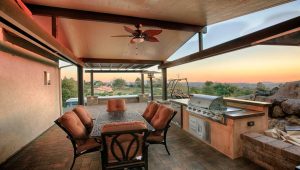
An outdoor kitchen transforms how you use your backyard. Cooking outside means entertaining guests while you grill, enjoying ocean breezes during meal prep, and keeping cooking heat and smells out of your home. Orange County’s mild climate makes outdoor kitchens practical year-round.
But building an outdoor kitchen in Orange County involves more than picking appliances and countertops. Permits, gas lines, electrical work, and building codes all come into play. This guide walks through the planning process so you know what to expect.
Why Orange County Homeowners Love Outdoor Kitchens
Our weather supports outdoor cooking roughly 340 days per year. Morning fog clears by midday most of the time, and evening temperatures stay comfortable for dining al fresco. This makes an outdoor kitchen a genuine extension of your living space rather than a seasonal feature.
Property values also benefit. Outdoor kitchens rank among the most desirable backyard features for Southern California home buyers. A well-designed cooking space can return significant value when you sell.
The social aspect matters too. Traditional indoor kitchens isolate the cook from guests. Outdoor kitchens flip that dynamic. You stay part of the gathering while preparing food, and guests often cluster around the grill and island.
Planning Your Layout
Layout determines how well your outdoor kitchen functions. The right arrangement makes cooking efficient and enjoyable. Poor layout creates frustration every time you use the space.
L-Shaped Layouts work well for medium-sized spaces. One arm typically holds the grill and cooking surfaces while the other provides prep space and storage. The corner creates a natural work triangle similar to indoor kitchen design principles. This configuration also defines space between cooking and dining areas.
Straight-Line Layouts fit narrow spaces or situations where the kitchen backs against a wall or fence. Everything aligns along one counter run. Keep the most-used elements central with storage and secondary appliances on the ends. This layout costs less than more complex configurations.
U-Shaped Layouts maximize counter space and storage for serious cooks. The enclosed design creates an efficient workspace with everything within reach. This configuration works best in larger backyards where it will not overwhelm the patio.
Island Layouts place the kitchen as a freestanding element in the yard. This works well when you want the cook facing guests or a view. Islands require utility runs through the patio slab, which adds complexity and cost.
Review outdoor kitchen layout ideas for visual examples of each configuration.
Must-Have Features
Certain elements appear in nearly every successful outdoor kitchen. Building these in from the start costs less than adding them later.
A Quality Grill anchors most outdoor kitchens. Built-in grills range from basic to professional-grade. Look for 304 stainless steel construction, adequate BTU output for your cooking style, and a warranty that covers outdoor use. Size the grill for how you actually cook rather than assuming bigger is better.
Counter Space for prep work and serving makes the kitchen functional. Plan for at least four feet of clear counter on one side of the grill. More is better if space allows. Granite, quartzite, and porcelain slabs all perform well outdoors in Orange County.
Storage keeps supplies organized and protected. Base cabinets below counters provide the most storage. Use marine-grade materials or stainless steel for durability. Consider what you will store when sizing and configuring cabinets.
A Sink with running water improves both convenience and food safety. Washing produce, rinsing hands, and cleaning up all become easier. Sinks require water supply and drain lines, which adds to utility costs.
Refrigeration eliminates trips inside for drinks and ingredients. Outdoor-rated refrigerators handle temperature fluctuations and humidity better than indoor models. Under-counter units integrate cleanly into island designs.
For a complete list, see outdoor kitchen must-haves.
Gas And Electrical Requirements
Most outdoor kitchens need both gas and electrical service. Understanding these requirements early prevents surprises during construction.
Natural Gas fuels most built-in grills, side burners, and warming drawers. Running a gas line from your meter to the outdoor kitchen requires a licensed plumber and typically a permit. Line sizing depends on total BTU demand from all gas appliances. Locate the shut-off valve where you can reach it quickly.
Propane offers an alternative where natural gas is unavailable or impractical. Larger built-in tanks can be hidden within cabinet bases. Propane costs more per BTU than natural gas but eliminates the gas line installation expense.
Electrical Service powers refrigerators, lighting, outlets, vent hoods, and any electric appliances. Most outdoor kitchens need a dedicated circuit from the main panel. GFCI protection is required for all outdoor outlets. Overhead lighting may need separate switching.
Consider future needs when sizing utility runs. Adding a pizza oven or rotisserie later becomes much easier if gas and electrical capacity already exist.
Building Codes And Permits
Orange County jurisdictions enforce building codes that affect outdoor kitchen construction. Permits ensure work meets safety standards and protects your investment.
Permit Requirements vary by city. Most Orange County cities require permits for permanent outdoor kitchens with gas connections. Electrical work almost always requires a permit. Some jurisdictions require separate permits for gas and electrical.
Setback Requirements dictate minimum distances from property lines and structures. Combustible structures like wood pergolas have specific clearance requirements from grills and fire features. These rules exist to prevent fires and ensure safe evacuation paths.
Ventilation Standards apply when outdoor kitchens sit under solid roof structures. Grills produce carbon monoxide and grease-laden smoke. Adequate ventilation prevents buildup of dangerous gases and reduces fire risk.
HOA Approvals often run parallel to city permits. Many Orange County communities require design review before construction starts. Submit accurate plans showing materials, colors, and dimensions. Some HOAs have pre-approved design standards that simplify approval.
Working with a design-build firm that handles permitting removes this burden from homeowners. We know the requirements in each Orange County jurisdiction and prepare applications that get approved.
Example Configurations
Seeing real examples helps clarify what fits your situation.
The Efficient Entertainer features a 36-inch grill, single side burner, under-counter refrigerator, small sink, and eight feet of L-shaped counter space. This configuration handles most entertaining needs without overwhelming a typical Orange County backyard. Budget range: $30,000 to $50,000 installed.
The Serious Cook adds a built-in smoker or pizza oven, double side burners, larger refrigerator, and dishwasher. Counter space expands to twelve feet or more in a U-shape. This setup handles complex menus and larger gatherings. Budget range: $60,000 to $100,000 installed.
The Complete Outdoor Room integrates the kitchen with covered dining, lounge seating, fire features, and entertainment systems. High-end appliances, premium countertops, and custom cabinetry throughout. This transforms backyards into resort-style spaces. Budget range: $100,000 to $200,000 or more.
These ranges include design, permitting, construction, and appliances. Actual costs depend on site conditions, material selections, and scope of work.
Typical Budget Ranges
Understanding costs helps set realistic expectations. Outdoor kitchen pricing in Orange County reflects our higher labor and material costs compared to other regions.
Entry Level ($25,000 to $40,000): Basic configuration with quality grill, adequate counter space, simple storage, and necessary utilities. Good for homeowners who want functional outdoor cooking without extensive features.
Mid-Range ($40,000 to $75,000): Expanded features including refrigeration, sink, additional cooking appliances, more counter space, and upgraded finishes. This range satisfies most serious entertainers.
High-End ($75,000 to $150,000+): Premium appliances, extensive counter space, full utility buildout, custom cabinetry, and designer finishes. Often combined with adjacent features like covered structures and fire elements.
Several factors push costs higher. Difficult utility runs, sloped sites, premium materials, and complex designs all add expense. Getting multiple bids helps establish fair pricing for your specific project.
Financing options can make larger projects accessible without depleting savings.
Choosing Materials That Last
Orange County’s coastal climate affects material durability. Salt air, UV exposure, and occasional rain all impact outdoor kitchen components.
Countertops: Granite and quartzite handle outdoor conditions well. Porcelain slabs offer excellent durability with more pattern options. Concrete can work but requires sealing and maintenance. Avoid marble, which stains and etches easily.
Cabinetry: Marine-grade polymer, stainless steel, and powder-coated aluminum last longest. Wood requires careful species selection and ongoing maintenance. Teak and ipe hold up best among natural wood options.
Frames and Structure: Steel frames with proper coating resist corrosion. Concrete block provides solid structure for veneers. Aluminum frames work well under covered areas.
Appliances: Look for stainless steel rated for outdoor use. Entry-level stainless often contains less chromium and corrodes faster near the coast. Premium outdoor-rated appliances justify their higher cost through longer service life.
Working With A Design-Build Team
Outdoor kitchen projects involve multiple trades. Design, concrete work, masonry, plumbing, electrical, gas fitting, and finish carpentry all come together. Coordinating these trades yourself creates headaches.
A design-build approach combines design and construction under one contract. You work with a single team from concept through completion. Communication stays simple because everyone answers to the same project manager.
Design-build also provides accurate budgeting earlier in the process. When the same company designs and builds, they know actual construction costs. Designs reflect budget realities rather than wish lists that require value engineering later.
Our team at Western Outdoor has built outdoor kitchens throughout Orange County including Newport Beach, Huntington Beach, and San Clemente. We handle all permitting and inspections, coordinate every trade, and deliver completed projects ready to use.
Start Planning Your Outdoor Kitchen
An outdoor kitchen project takes three to six months from initial design through completion. Starting the planning process now positions your project for completion before next summer’s entertaining season.
Request a free consultation to discuss your outdoor kitchen ideas. We will review your space, understand how you want to use your outdoor kitchen, and explain what’s possible within your budget. From there, our design team creates detailed plans and renders that show exactly what you’ll get.
Let Western Outdoor Design and Build manage the complexity so you can focus on which recipes to try first.